
Private equity firm CVC Capital has made an estimated $8.2bn from its investment in Formula One since 2006.

|
ey day: just one thing. (push, pull) today, from yesterday, into tomorrow. ey day: the daily. |
Private equity firm CVC Capital has made an estimated $8.2bn from its investment in Formula One since 2006.

rosetta from philae with comet 67P/Churyumov–Gerasimenko
via nasa


hey, rosetta.

leaked new york times innovation report.

transits, midnight moment.

Baudrillard described an arbitrary sign as something produced when, “instead of linking two persons in an unbreakable reciprocity, the signifier starts referring back to the disenchanted world of the signified, a common denominator of the real world to which no one has any obligation.” Videogames produce this sort of paradox in requiring depersonalized adherence to arbitrary order to qualify as play, while simultaneously engendering forgetfulness of the ethics surrounding them the more game-like they become.
gamers.


for the love of pen and paper.


ring of leontios, c.1000AD.

portraits designed to be seen by drone operators, pakistan.

"Before you put pen to paper, before you ring for your stenographer, decide in your own mind what effect you want to produce on your reader — what feeling you must arouse in him." Robert Collier
13 ideas.


saul bass logo designs, then and now.

time to kill agile, by pragdave.

the other times modern, via fonts in use.

There are three elements to great product design: value, ease of use and craftsmanship. How these elements are defined may differ depending on the audience for whom you’re designing and the problem you’re looking to solve. But at a high level, these three elements are universally necessary and desired.
margaret stewart: understand who you design for.

julie zhuo on how to get a designer.

in defense of the first, from the baltimore sun

via nathan barry.

The second, he added, “is leadership — in particular emergent leadership as opposed to traditional leadership. Traditional leadership is, were you president of the chess club? Were you vice president of sales? How quickly did you get there? We don’t care. What we care about is, when faced with a problem and you’re a member of a team, do you, at the appropriate time, step in and lead. And just as critically, do you step back and stop leading, do you let someone else? Because what’s critical to be an effective leader in this environment is you have to be willing to relinquish power.”
What else? Humility and ownership. “It’s feeling the sense of responsibility, the sense of ownership, to step in,” he said, to try to solve any problem — and the humility to step back and embrace the better ideas of others. “Your end goal,” explained Bock, “is what can we do together to problem-solve. I’ve contributed my piece, and then I step back.”
friedman on google.


get to the point.
john caples.

squashed type, jumping left to right alignments, and - to push it beyond redemption - making the Y die into the N.
this new logo makes me physically uncomfortable.
why, pentagram?

Enjoy the whimsical incongruity of buying over-priced semi-precious necklaces while clonking around these faux-authentic haunted coffins of heavy industry. The containers' use in sites like the Heygate is part of neoliberalism's cunning fetishisation of the ruin.
vice tries hard.
dig through the hyperbole and the 'florid purple prose' and there's a good point, here.
facebook's own greed is killing it.
on to the next.

a subtle message to fox's creationist viewer base (boss of the cosmos).

The British economist Roger Bootle has written about the difference between “creative” and “distributive” work. Creative work, Bootle says, is work that brings something new into the world that adds to the total available to everyone (a doctor treating patients, an artist making sculptures). Distributive work, on the other hand, only carries the possibility of beating out competitors and winning a bigger share of a fixed-size market. Bootle explains that although many jobs in modern society consist of distributive work, there is something intrinsically happier about a society that skews in favor of the creative.
“There are some people who may derive active delight from the knowledge that their working life is devoted to making sure that someone else loses, but most people do not function that way,” he writes. “They like to have a sense of worth, and that sense usually comes from the belief that they are contributing to society.”
why young bankers are so miserable.
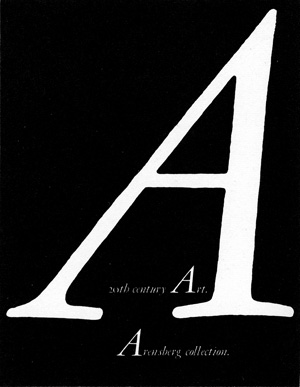

paul rand on the use of black.

trading clothes is always a hit.
qozop.


